Wholesale distribution ERP: The top ERP systems for 2026




For drywall and building material distributors, the last mile of delivery is not just about reaching the job site. It is about getting every bundle, board, and piece of material to the correct offload location.
Construction sites are often busy, changing environments. A single order may include materials for several floors, separate work zones, or different contractors. When delivery instructions are scattered across handwritten notes, phone calls, and order-level comments, drivers can struggle to determine exactly where each item belongs.
The result can be misplaced materials, unnecessary handling, delivery delays, and frustrated contractors.
Line-item location tagging helps distributors organize these instructions at the individual product level, making delivery information clearer from order entry to offloading.

Unlike deliveries to a single warehouse or storefront, construction deliveries often involve multiple drop-off points within the same project.
A typical delivery may include:
When the entire order has only one general delivery address, drivers may have no reliable way to identify where each product should go.
They may need to call the sales team, wait for instructions from a site supervisor, or unload materials in a temporary location before moving them again. These extra steps consume time and can disrupt the contractor's schedule.
For hardware and building material distributors, better delivery instructions can help reduce this operational friction and improve coordination between sales, dispatch, drivers, and customers.
Line-item location tagging allows a distributor to assign a specific delivery or offload location to each product line within an order, rather than relying on a single instruction for the entire shipment.
For example:
Order item
Quantity
Offload location
½-inch drywall
5 bundles
Upper main floor, east side
Fire-rated board
2 bundles
Basement, mechanical shaft
Lumber
20 pieces
Dock B, rear access
Instead of interpreting a general delivery note, the driver can use the location assigned to each item to understand where the materials are intended to go.
This distinction is especially valuable when a single order contains products for several floors, zones, or stages of construction.
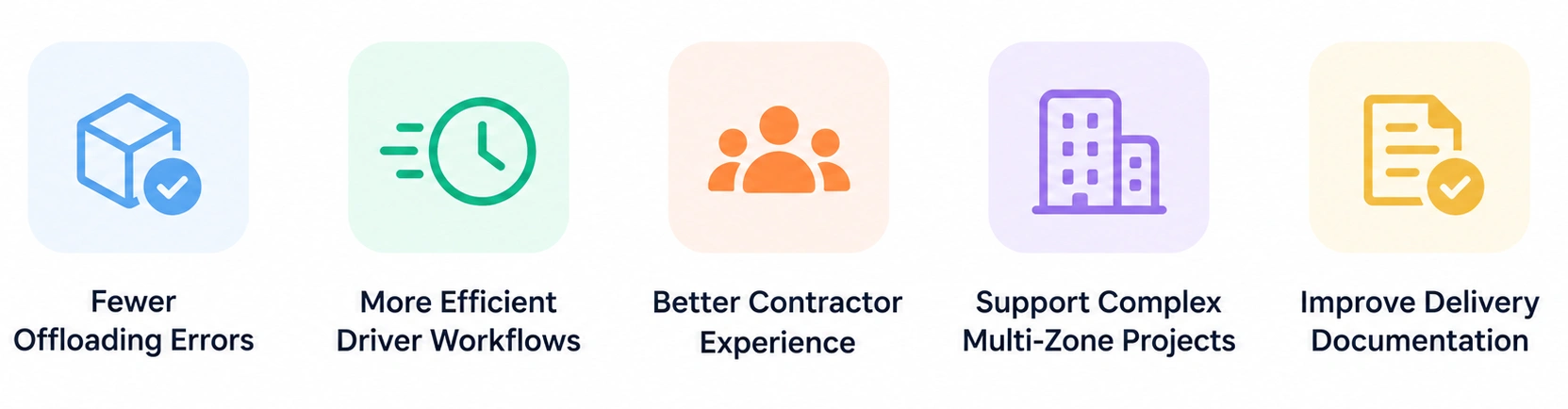
1. Reduce Offloading Errors and Unnecessary Handling
When product lines carry clear location instructions, drivers have better information about where each item belongs. This can reduce confusion, misplaced materials, and the need to move products after unloading.
For heavy or bulky materials such as drywall, avoiding unnecessary handling is particularly important. It can save time and help teams coordinate unloading more effectively.
Better instructions will not eliminate every delivery problem, but they can address one preventable source of confusion: unclear offload locations.
Drivers should not have to reconstruct delivery instructions from several notes or repeatedly contact the office to clarify basic details.
When locations are recorded against individual order lines and made available on the relevant delivery documents, drivers can review requirements before reaching the site.
This gives dispatchers and drivers a clearer starting point for organizing the unloading sequence, subject to site access rules, equipment requirements, and safety procedures.
The potential benefit is less time spent clarifying instructions and more predictable delivery execution.
Contractors depend on materials arriving at the right place so crews can continue working. Materials delivered to the wrong floor or work zone may need to be relocated before installation can begin.
Clear offload instructions help distributors coordinate with site supervisors and communicate delivery requirements more consistently.
Over time, dependable delivery coordination can support stronger customer relationships, especially for distributors serving repeat commercial and residential construction projects.
Explore the VitalGap case studies to learn more about distributor operations and the challenges businesses work to solve.
A small residential project may have one practical drop-off point. A large commercial development may require materials to be distributed across multiple floors, wings, or designated staging areas.
As projects become more complex, general order-level instructions can become harder to manage.
Line-item tagging provides a more structured way to associate products with their intended locations. It can help teams handle detailed delivery requirements without relying entirely on informal notes or verbal explanations.
The exact workflow will depend on the software's capabilities and how each distributor organizes its orders.
When a delivery instruction is recorded against the relevant product line, office staff and drivers have a clearer reference for the intended offload location.
This can help teams investigate discrepancies and resolve questions about what was requested.
However, a location tag alone does not prove that an item was delivered correctly. If a distributor needs a complete audit trail, it should also evaluate whether its system records changes, delivery confirmations, timestamps, photographs, or other proof-of-delivery information.
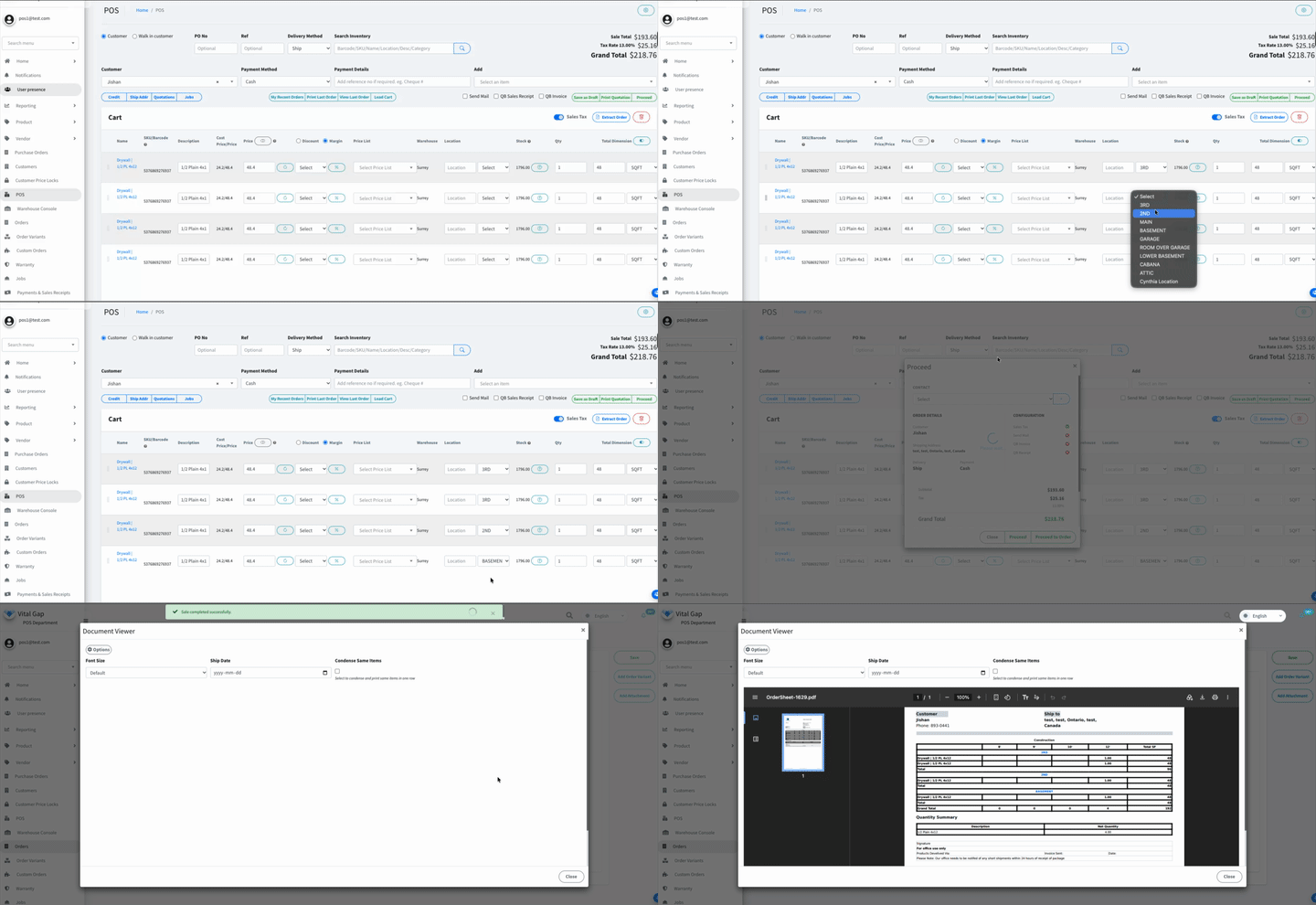
For distributors evaluating delivery management features, the important question is how location instructions fit into the existing order workflow.
VitalGap's location-tagging workflow should be assessed against the following requirements and confirmed in a product demonstration.
Sales or order-entry staff should be able to associate each product line with its intended offload location. Depending on the workflow, this may involve selecting a saved location or entering a more detailed instruction.
For example, a residential delivery might use a predefined location, while a commercial project may need a description such as “Level 4, east corridor, near stairwell.”
Location information is most useful when the people handling the delivery can access it easily.
Confirm whether the relevant location details appear on packing slips, pick lists, build sheets, driver manifests, or other documents used by your team. The exact document types and available fields should be verified with VitalGap.
Some construction orders require different products to be delivered to different zones within one job site. Evaluate whether the workflow supports the level of detail your business needs, including multiple offload locations and any relevant saved job-site information.
The goal is to make delivery instructions available to the people who need them, reducing dependence on separate notes and repeated phone calls.
Ask how changes to locations are handled after order entry, how updated documents are generated, and how dispatchers communicate last-minute changes to drivers.
VitalGap focuses on wholesale distribution workflows. Learn more about its solutions for hardware and building material distributors and explore the broader VitalGap platform.
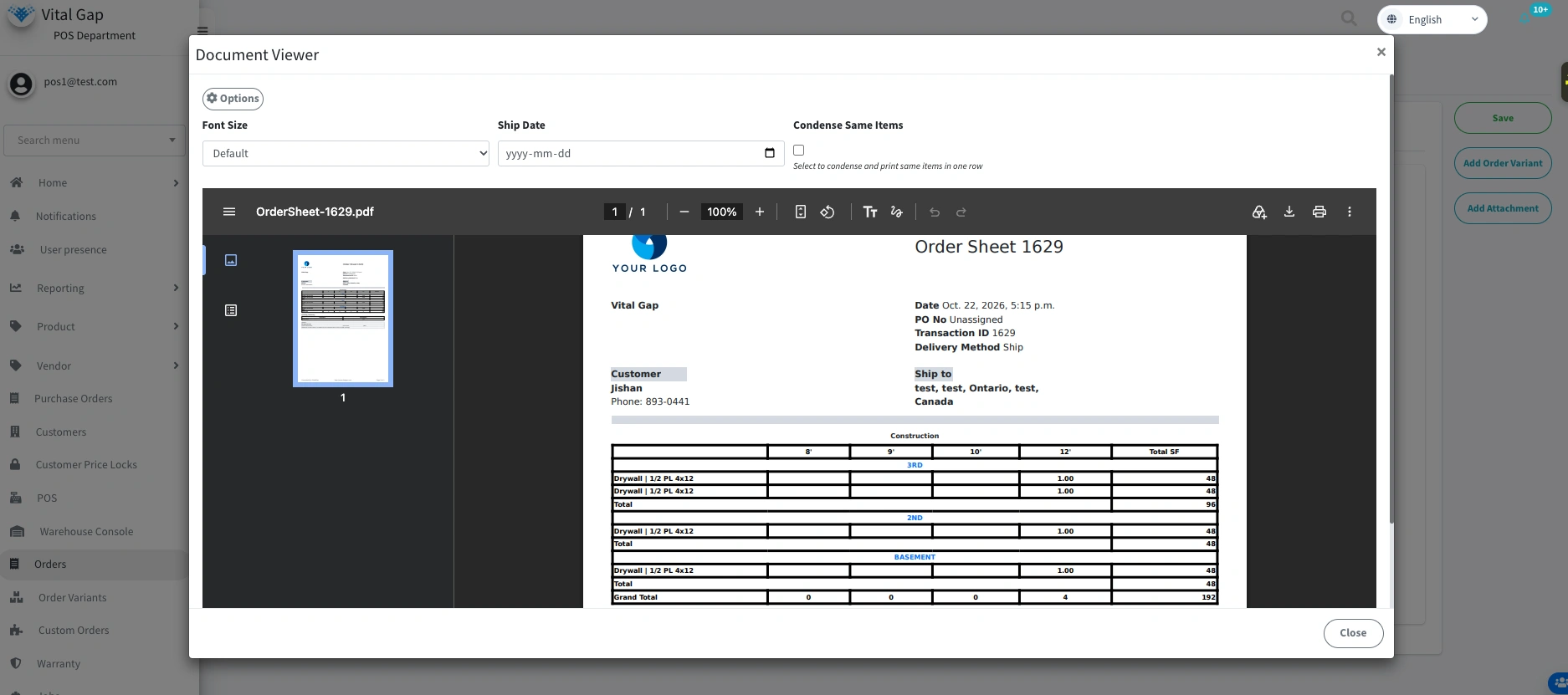
Building material distribution involves more than picking the right products and transporting them to the correct address. Materials must also reach the right point on the job site, at a time when contractors can receive and use them.
Clear, product-level delivery instructions can help distributors:
The impact will vary by operation, so distributors should measure results using practical indicators such as delivery turnaround time, repeat trips, driver clarification calls, offload discrepancies, and customer complaints.
For drywall and building material distributors, delivery accuracy can affect both operational efficiency and customer satisfaction. When one order contains materials for several floors or work zones, a single general delivery note may not provide enough detail.
Line-item location tagging offers a more structured approach by connecting each product to its intended offload location. When integrated into order entry and the documents drivers use, it can make delivery instructions easier to follow and help teams coordinate complex job-site deliveries.
If your team still relies on handwritten notes and repeated phone calls to explain where materials belong, it may be worth reviewing how your current software handles product-level delivery instructions.
Want to see how VitalGap handles your distribution workflows? Book a demo with VitalGap to discuss your delivery requirements and confirm which capabilities fit your operation.
You can also visit the VitalGap FAQ or review pricing.
Line-item location tagging associates an individual product line in an order with a specific delivery or offload location. It is useful when products in the same order need to go to different floors, work zones, or unloading points.
Drywall deliveries often involve bulky bundles and construction sites with multiple designated drop-off points. Clear location instructions can help drivers place materials where they are needed and reduce avoidable handling or clarification calls.
That depends on the distribution software. Before selecting a system, confirm that it can associate different product lines with different locations within the same order and display those instructions on the documents used by drivers.
No. It can reduce confusion caused by unclear instructions, but successful delivery also depends on accurate order entry, communication, site access, driver execution, and appropriate delivery confirmation processes.
Whether you're looking to streamline operations, boost efficiency, or drive growth, VitalGap has the solutions you need.