What Is ERP for Wholesale Distribution? Features, Benefits, and How It Works




HVAC is not an easy business to run on spreadsheets. Demand spikes the moment the first heat wave or cold snap hits. Your warehouse holds thousands of parts, units and accessories, many of them serialized. Contractors expect their own pricing. Manufacturers send price increases every few weeks. If your stock, pricing and orders live in different systems, small mistakes turn into lost sales and lost margin.
The right ERP software brings all of it into one place. In this guide, you'll learn what an HVAC ERP actually does, how it differs from field service software, which features matter most and how to choose the right system for your business.
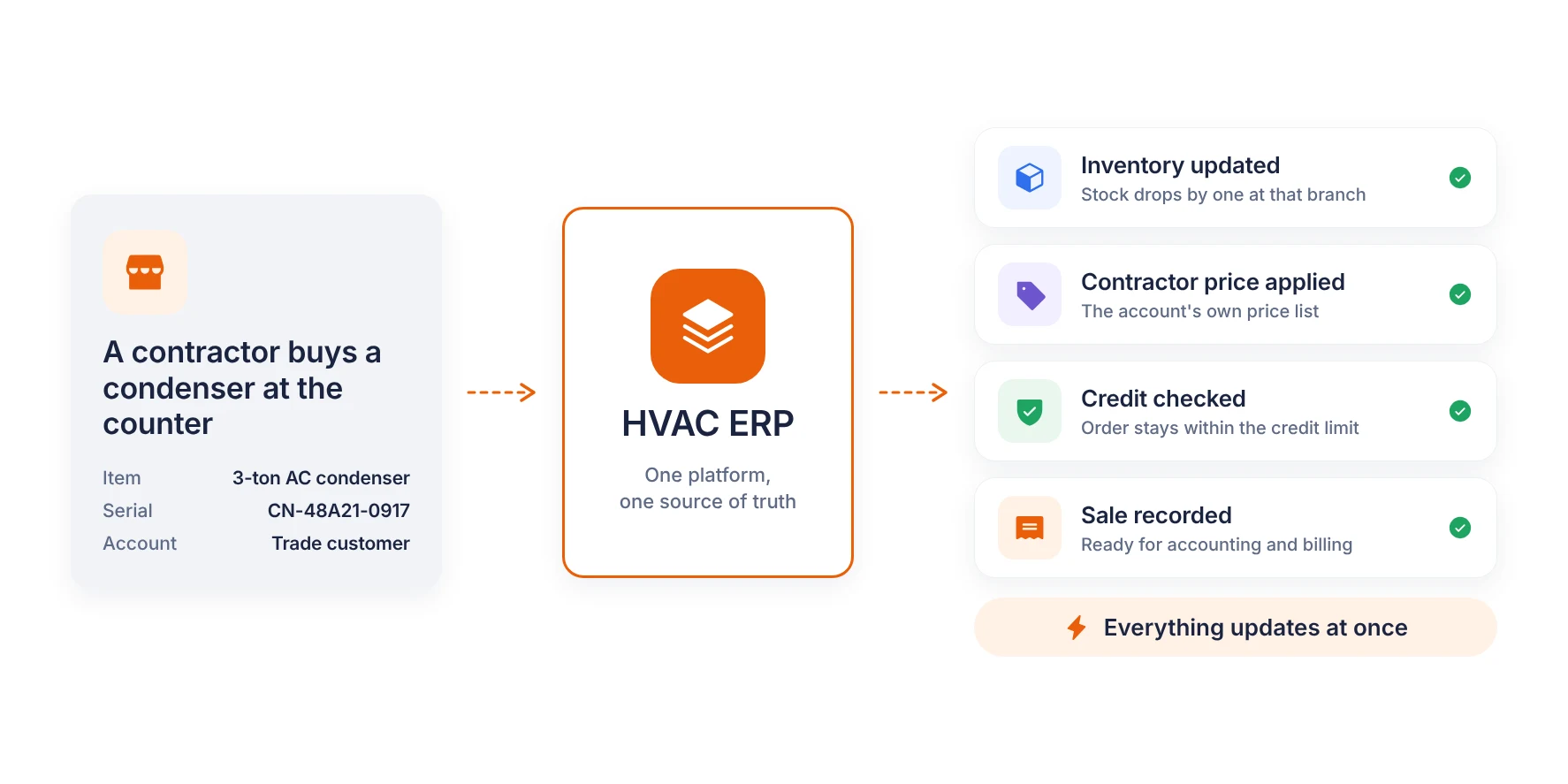
ERP software for HVAC businesses is a system that connects inventory, purchasing, sales orders, pricing, billing and accounting in one platform. It lets HVAC distributors and contractors manage stock, customers and finances from a single source of truth instead of juggling separate tools.
ERP stands for enterprise resource planning. In plain terms, it's the system your whole operation runs on. When a contractor buys a condenser at the counter, an ERP updates inventory, applies the right price, checks the customer's credit and records the sale for accounting, all at once.
This is very different from accounting software like QuickBooks. Accounting software records what happened financially. An ERP runs the operation that creates those numbers: what's in stock, what's on order, what each customer pays and what needs to be reordered.
HVAC also has needs that general business software often misses:
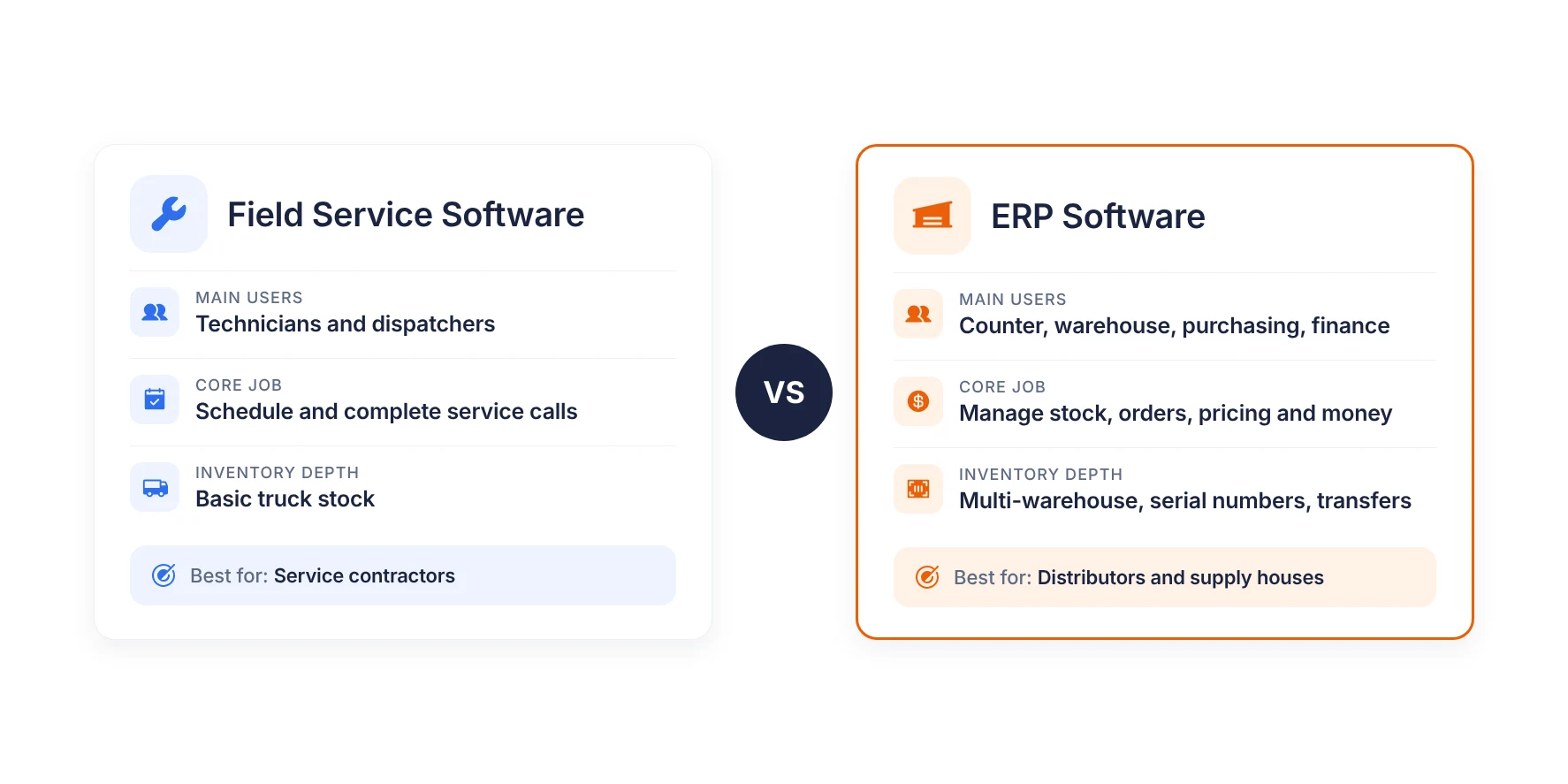
If you search for "HVAC ERP," many of the results are actually field service management (FSM) software. Both are useful, but they solve different problems. Choosing the wrong one is one of the most expensive mistakes an HVAC business can make.
Field service management software is built for technicians and dispatchers. It handles scheduling, dispatching, service calls, technician mobile apps and customer appointments. Well-known examples include ServiceTitan, Housecall Pro and Jobber.
ERP software is built for the people who manage stock, orders and money. It handles multi-location inventory, purchasing, pricing, counter sales, billing and accounting.
As a rule of thumb, an HVAC contractor that mainly sells service time needs field service software first. A distributor, supply house or contractor that buys and sells a lot of equipment and parts needs an ERP. Larger businesses often need both, connected so information flows between them.

The best software depends on how your business makes money. Start here before you compare vendors.
You sell equipment, parts and supplies to contractors, often across several branches. Your biggest challenges are stock accuracy, contractor pricing, counter speed, backorders and keeping up with supplier price increases. You need an HVAC distribution ERP built for wholesale operations.
You install, repair and maintain systems for homeowners and businesses. Your biggest challenges are scheduling, dispatching and getting paid. Field service software is usually your starting point. An ERP becomes important as your inventory, purchasing and number of locations grow.
You build equipment and sell it through dealers and distributors. You need a manufacturing ERP that handles production, bills of materials and dealer networks. That's a different category and outside the scope of this guide.
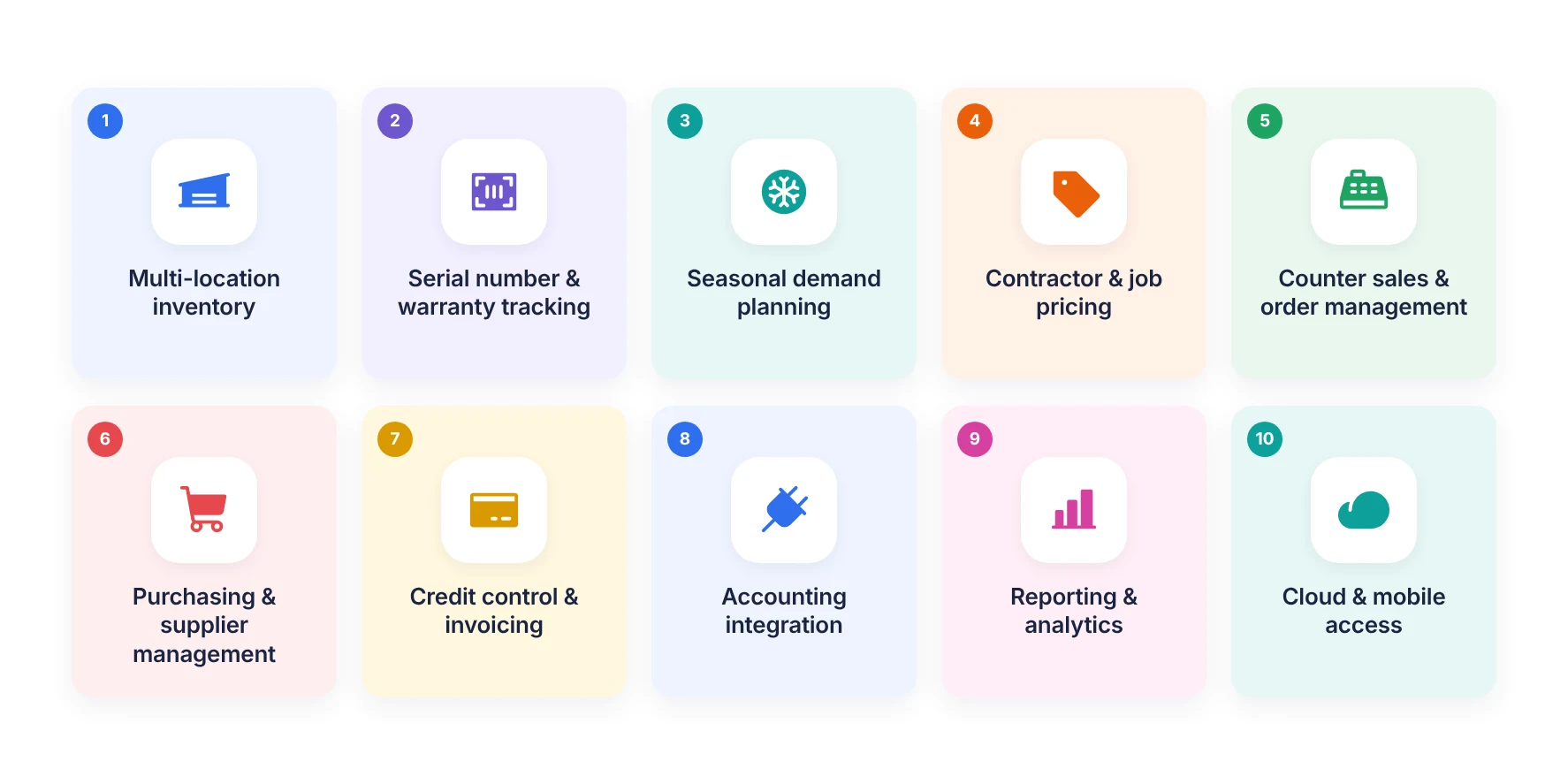
Whatever system you consider, these are the features that matter most for an HVAC business that buys, stocks and sells products.
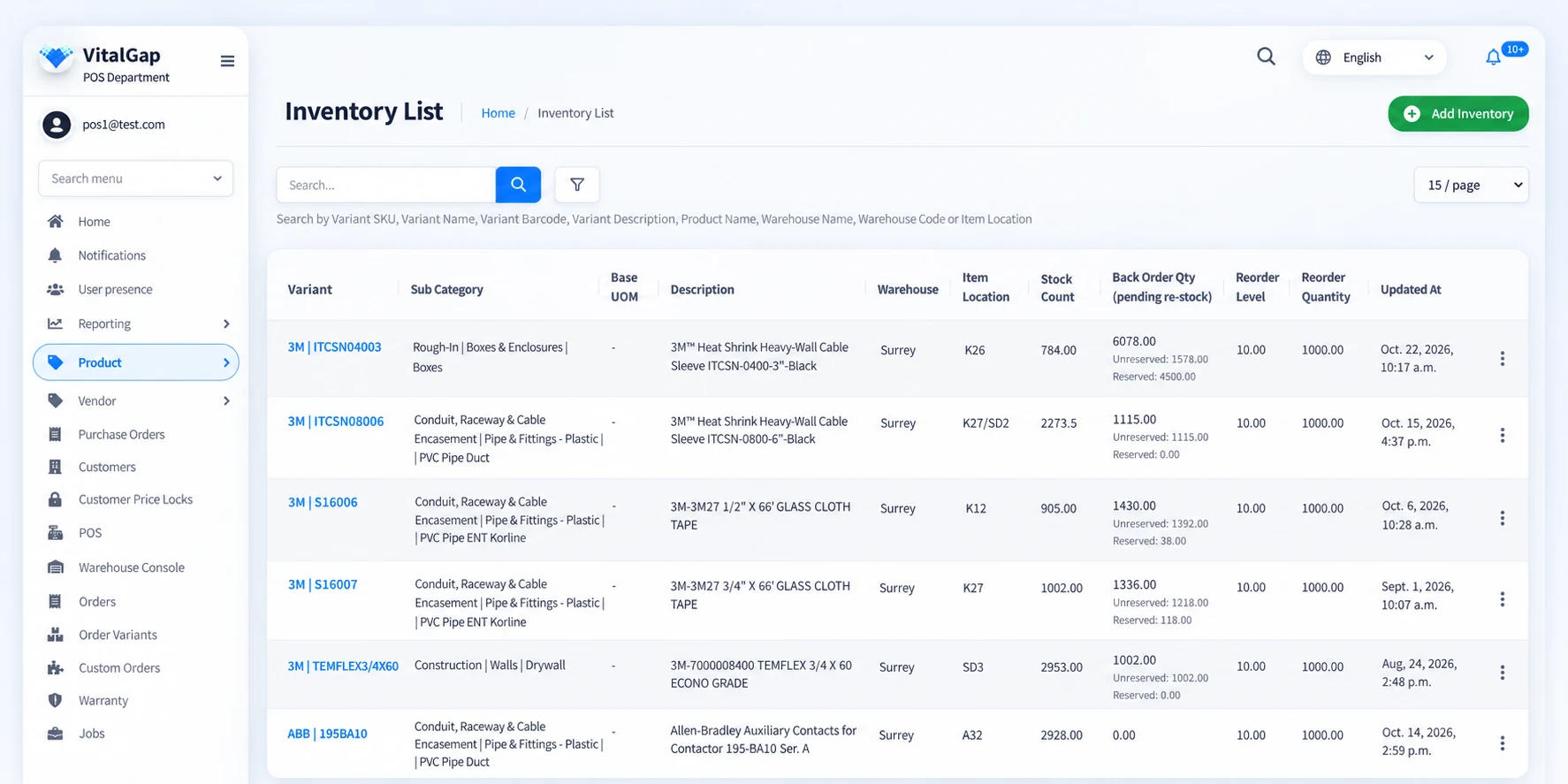
You need to see real-time stock across every warehouse and branch, including what's on hand, what's committed to orders and what's on the way from suppliers. Look for easy transfers between locations so one branch can cover another's shortage instead of losing the sale.
Units like furnaces, condensers and heat pumps should be tracked by serial number from receiving to sale. This makes warranty claims faster and gives you full traceability if a manufacturer issues a recall.
The worst time to discover you're out of stock is the first hot week of summer. A good HVAC ERP uses your sales history to recommend reorder points and minimum and maximum stock levels, so you stock up before peak season and avoid sitting on excess inventory in the off-season. Demand can also drop sharply from one year to the next. U.S. shipments of central air conditioners and heat pumps fell 20% in 2025, from 9,681,770 to 7,749,529 units.
Most HVAC distributors sell to contractors with negotiated pricing. Your ERP should apply customer-specific price lists and job pricing automatically on every order. It should also control who can override a price. This protects margin and stops staff from guessing. Small pricing mistakes add up fast: McKinsey found that a 1% price increase translates into an 8.7% increase in operating profits, assuming no loss of volume.
Contractors want to get in and out of the counter fast. Look for a point of sale built for trade customers, with live stock lookup and account pricing. Behind the counter, the system should handle partial shipments, backorders, split shipments and special orders for items you don't normally stock.
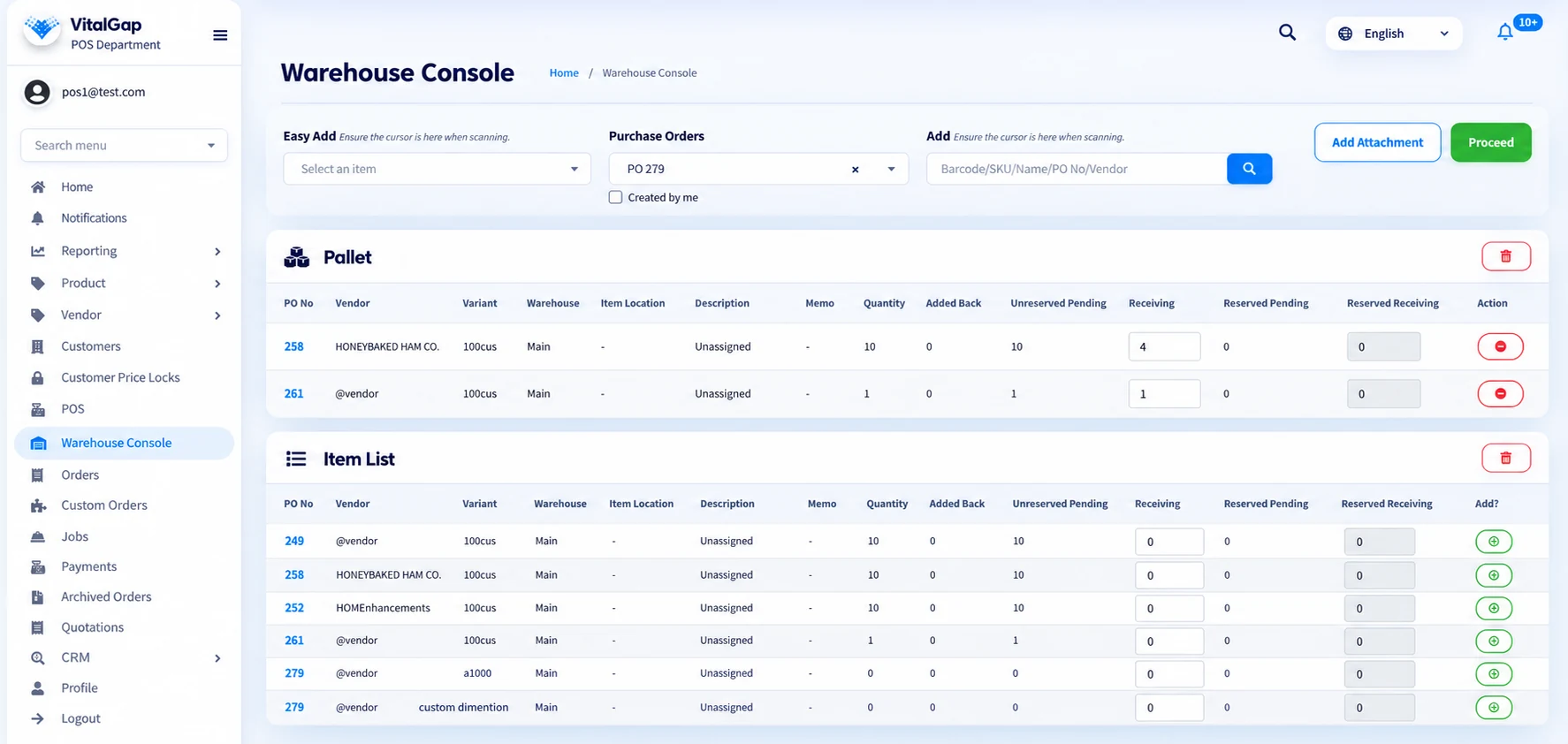
Purchasing should be connected to real demand. Buyers should see on-hand stock, committed quantities and customer backorders before they place a purchase order. Partial receiving and easy updates when manufacturers raise prices are essential.
Selling on terms to contractors is where many distributors make their money and where they take on risk. Overdue invoices affect 43% of credit-based B2B sales for U.S. companies, according to the 2025 Atradius Payment Practices Barometer. Look for credit limits that are checked as orders are entered, invoices generated directly from orders and clear A/R aging reports.
Many HVAC businesses want to keep the accounting system their finance team already trusts. An ERP that integrates with QuickBooks, Xero or Sage lets operations run in a system built for distribution without forcing a change in your books or creating double entry.
You should be able to see margin by customer, product and branch, along with inventory turns and slow-moving stock, without waiting for month-end or building spreadsheets.
A cloud-based ERP gives your team access from the counter, the warehouse or the road, with no servers to maintain. Mobile access in a web browser means sales reps and managers can check stock and orders from anywhere.
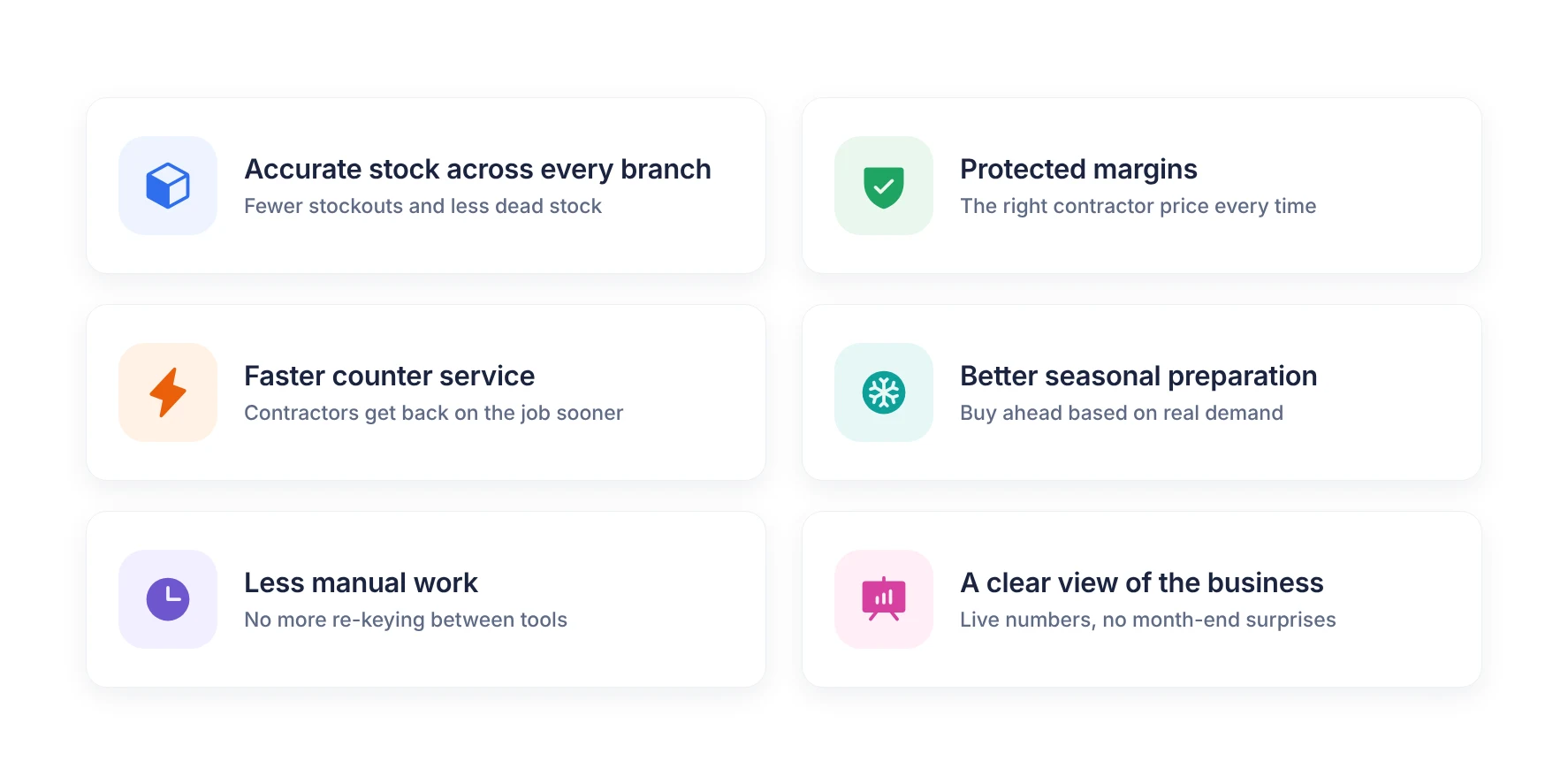
When the right ERP is in place, the benefits show up quickly across the business:
The spreadsheet point matters more than it seems. In field audits of real business spreadsheets reviewed by researcher Raymond Panko, 94% of the spreadsheets contained errors.
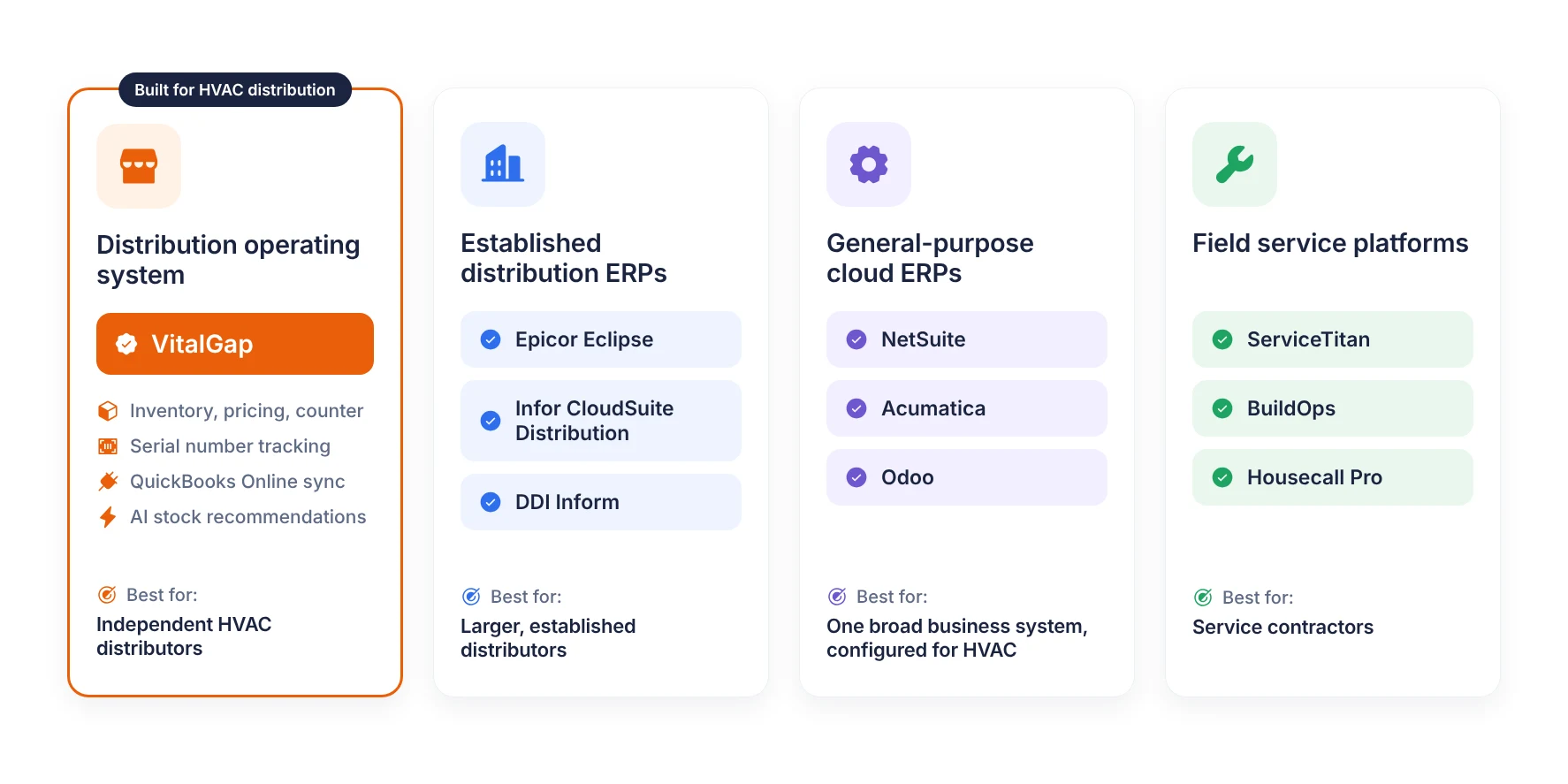
There is no single "best" ERP for every HVAC business. The right choice depends on your business type, size and how much complexity you're managing. Here are the strongest options, organized by the kind of business they fit best.

VitalGap is an AI-driven operating system built for wholesale distributors, including HVAC, electrical, building materials and steel. It's designed for independent distributors that have outgrown spreadsheets or entry-level tools but don't want the cost and complexity of a large enterprise ERP.
VitalGap brings multi-location inventory, serial number tracking, contractor and job pricing, counter sales, purchasing, credit control and reporting into one cloud platform. It syncs with QuickBooks Online, so finance teams can keep their books where they are. It also uses AI to recommend stock levels based on sales history.
HVAC distributors already run on VitalGap. Airtek, an HVAC distributor with five locations, uses it across its operation. As their team put it: "The system is easy to use and easy to understand."
Best for: Independent HVAC distributors and supply houses with one or more branches.
Epicor Eclipse is a long-standing distribution ERP widely used by electrical, plumbing and HVAC distributors. It offers deep functionality for wholesale operations and is often chosen by larger, established distributors.
Infor CloudSuite Distribution is a cloud ERP for distributors that covers inventory, purchasing, sales and financials. It's typically a fit for larger, multi-branch operations with complex requirements.
DDI Inform is a distribution ERP used by wholesale distributors across several industries, with tools for sales, inventory and reporting.
These systems are proven options, but they can involve longer implementations and higher costs, which is worth weighing for smaller and mid-sized distributors.

NetSuite, Acumatica and Odoo are flexible cloud ERPs used across many industries. They can work for HVAC businesses, but they usually need configuration, add-ons or an implementation partner to handle HVAC-specific needs like contractor pricing, counter sales and serialized equipment.
ServiceTitan, BuildOps and Housecall Pro are popular platforms for HVAC contractors. They focus on scheduling, dispatch, technician workflows and customer service. They're excellent for service contractors, but they're field service platforms rather than distribution ERPs.
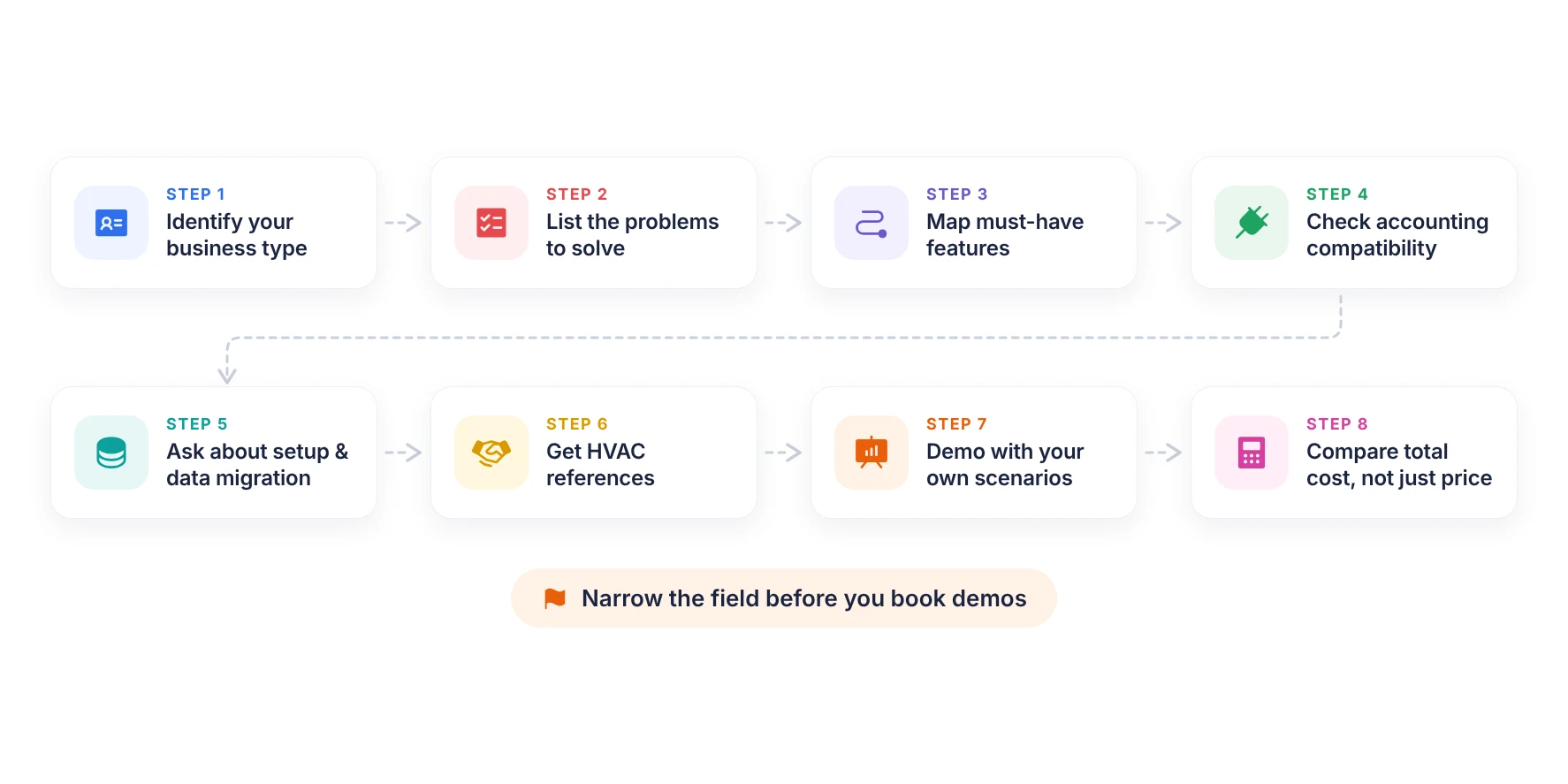
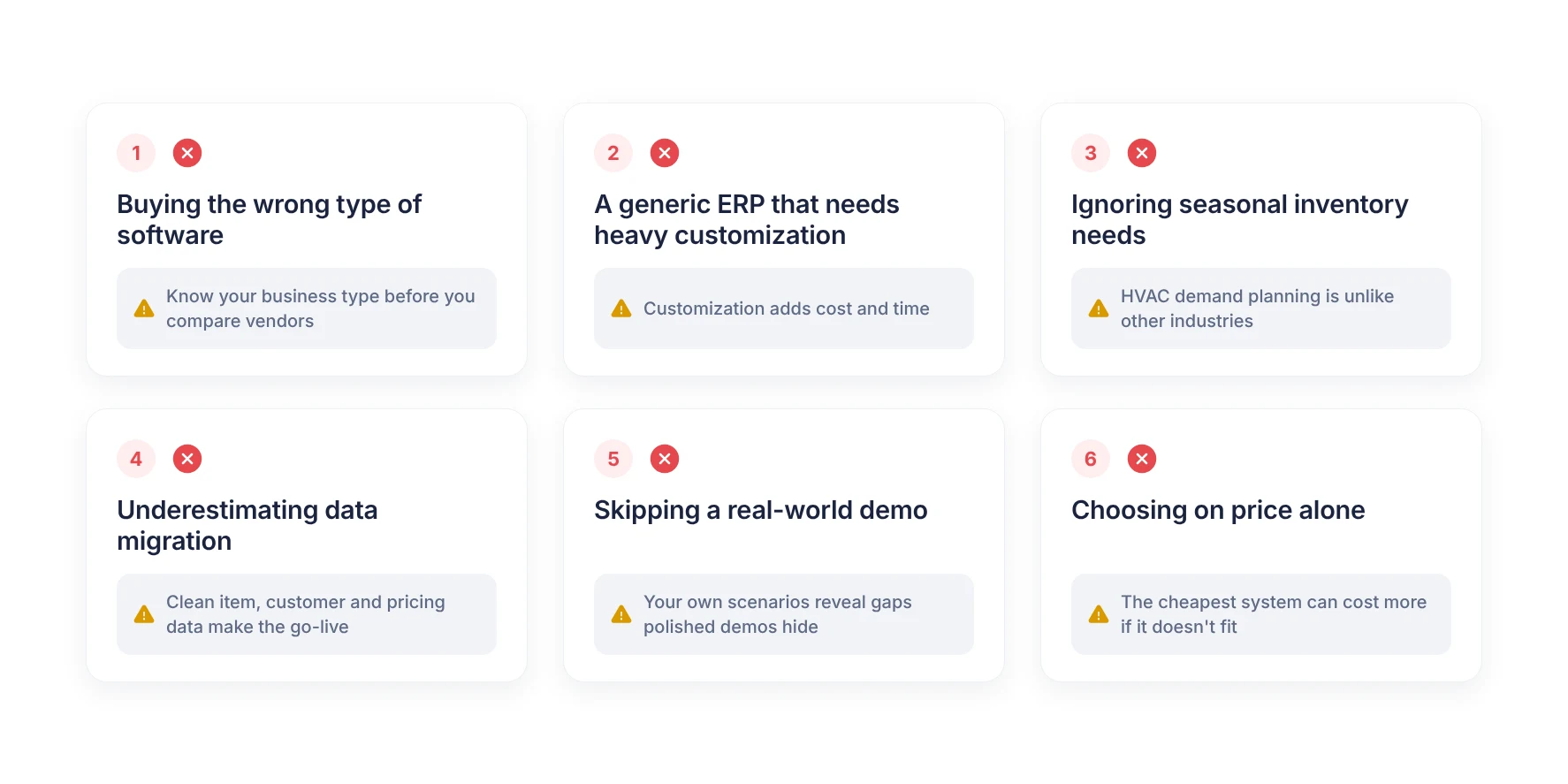
Follow these steps to narrow the field and avoid costly mistakes.
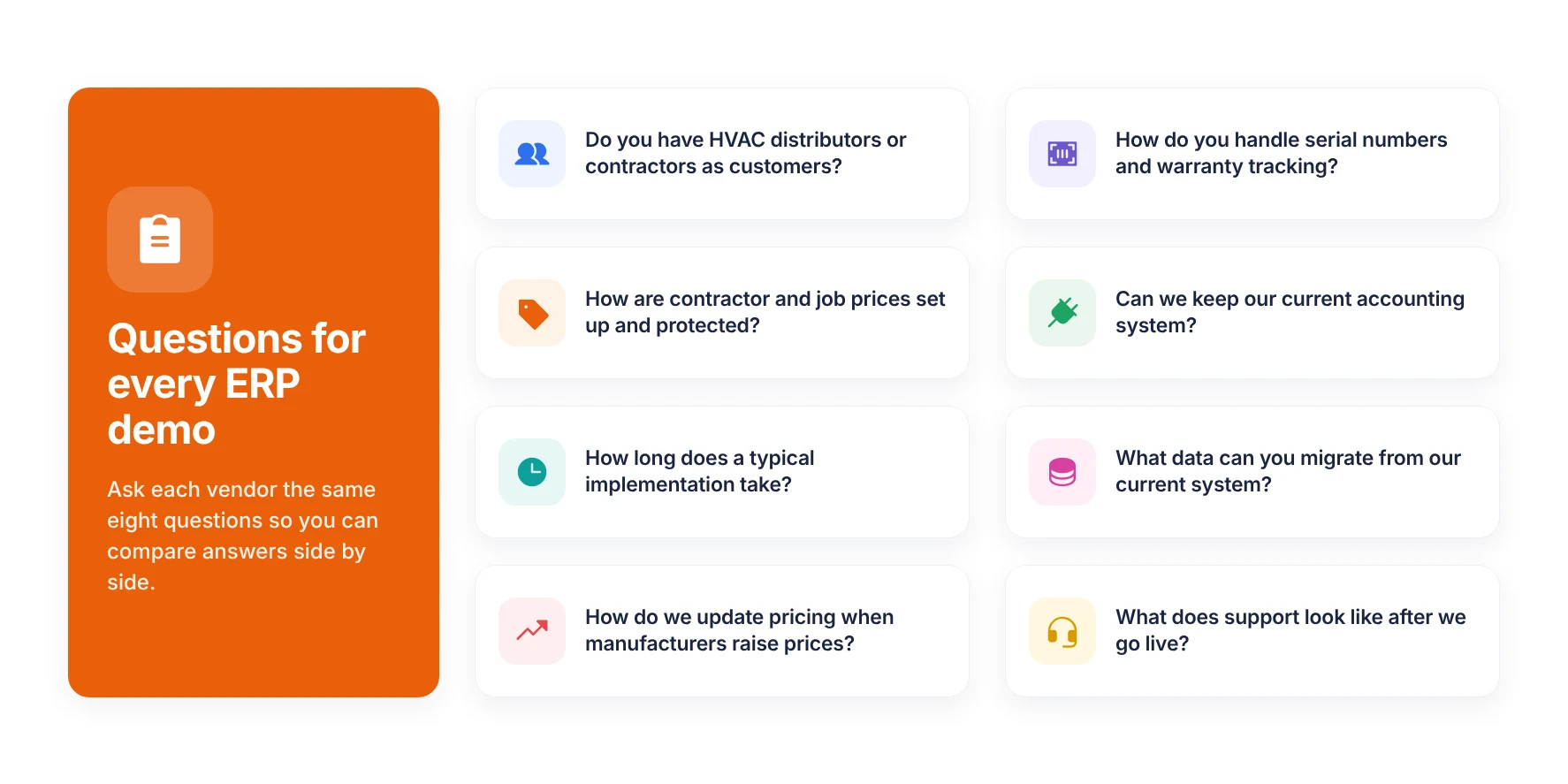
Bring these questions to every demo:
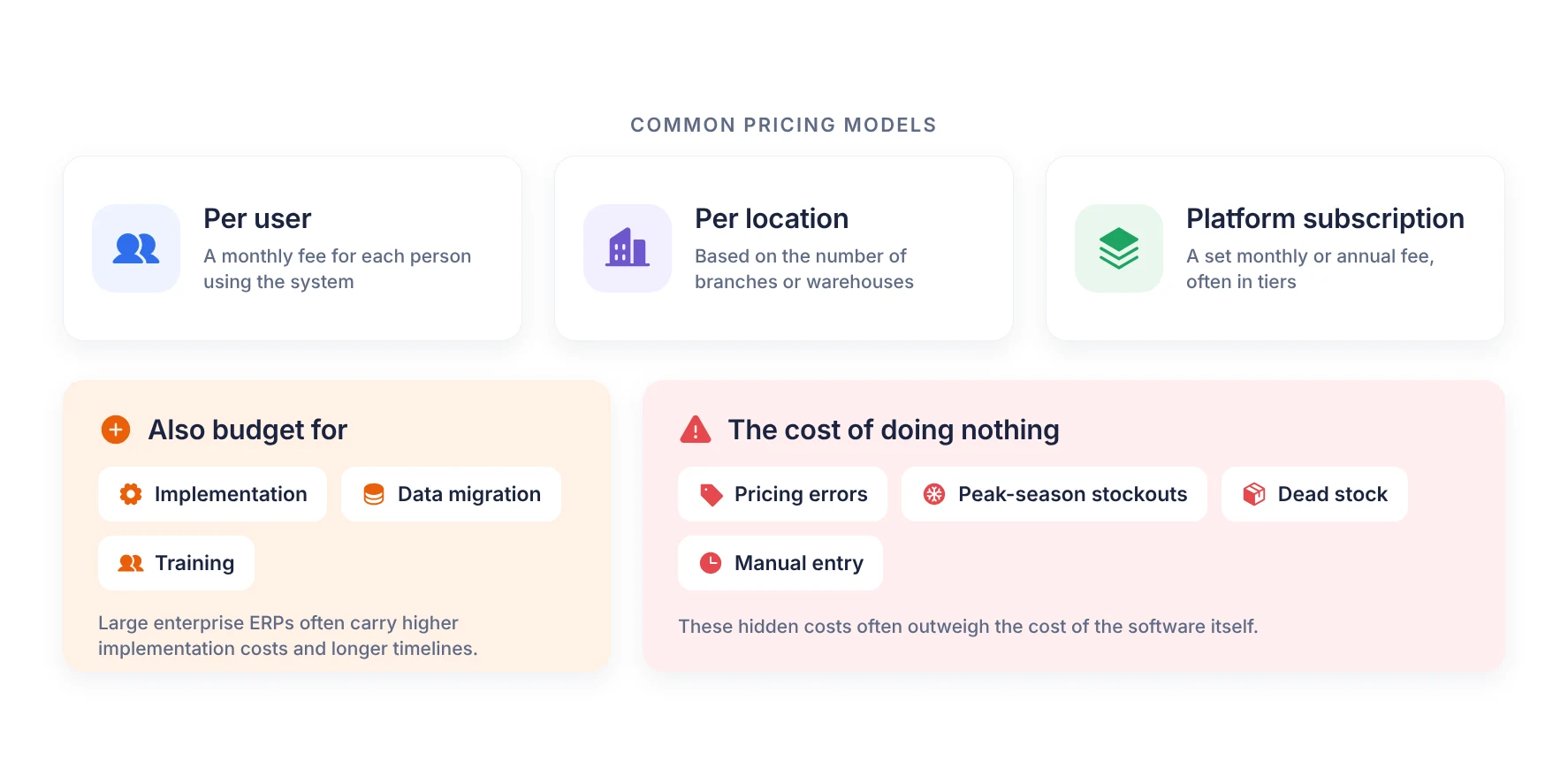
ERP pricing varies widely, so be cautious of any single "average" number. Most vendors use one or more of these pricing models:
On top of the subscription, budget for implementation, data migration and training. Larger enterprise ERPs often carry higher implementation costs and longer timelines than systems built for mid-sized distributors. Even well-planned ERP projects can slip: in Panorama Consulting's 2026 ERP Report, more than a quarter of organizations went over budget, and the median project took nine months.
Don't forget the cost of doing nothing. Pricing errors, stockouts during peak season, dead stock and hours lost to manual entry all add up. For many HVAC distributors, those hidden costs are larger than the cost of the software itself.
The best way to compare is to request a quote based on your number of locations, users and requirements.
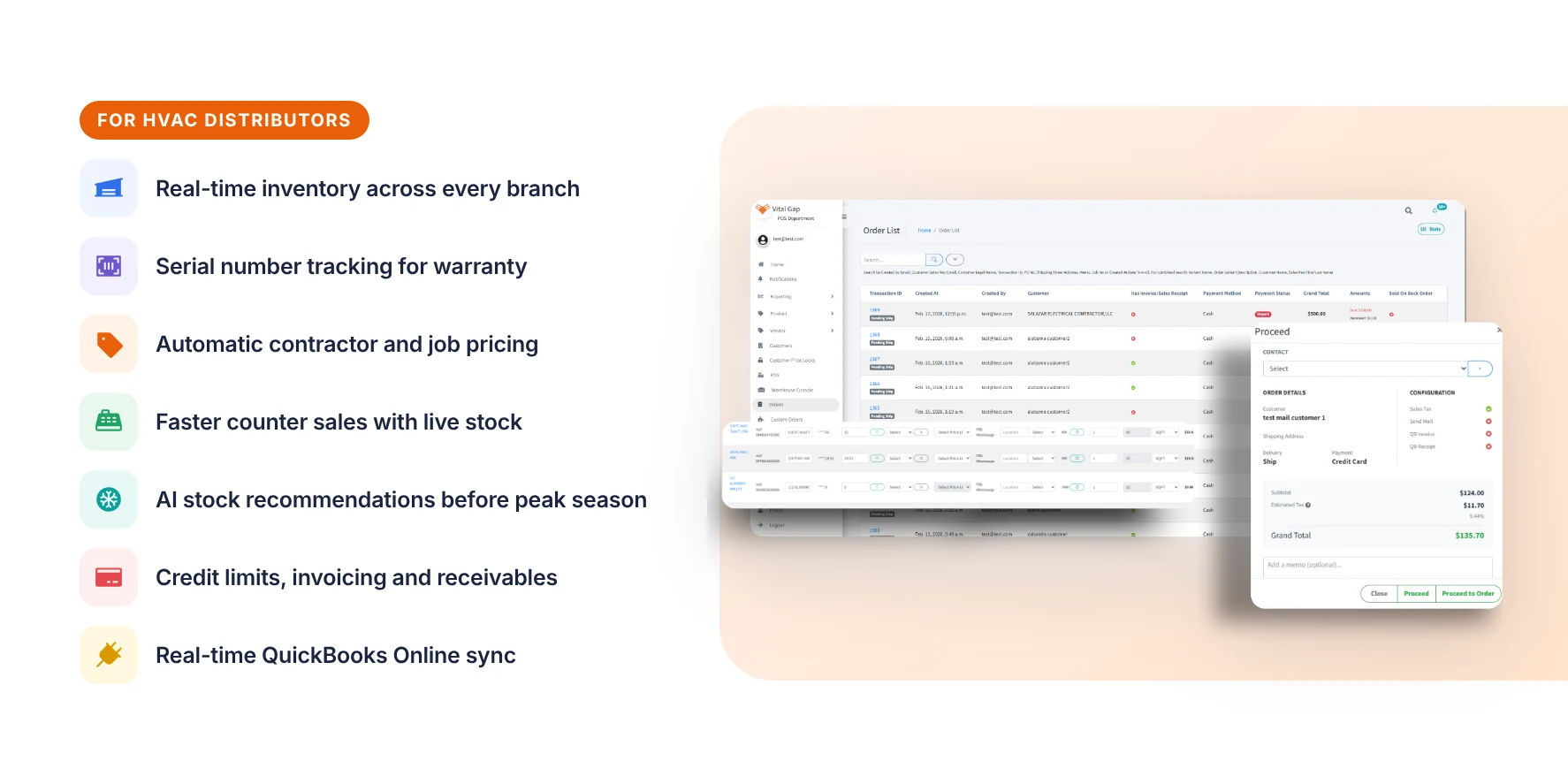
As HVAC distributors grow, managing stock, contractor pricing, purchasing and accounting across separate systems becomes harder every season. VitalGap connects these workflows in one AI-driven operating system built for distribution.
With VitalGap, HVAC distributors can:
See how VitalGap helps HVAC distributors manage inventory, pricing and purchasing in one platform. [Book a demo]
The best ERP software for your HVAC business depends on how you operate. Start by identifying whether you're a distributor, a contractor or both. Then prioritize HVAC-specific features like serial tracking, contractor pricing and seasonal planning. A system built for the way you buy, stock and sell will serve you far better than one you have to bend to fit.
Next, test every system with your own real scenarios before you commit. Ask to see a backorder, a contractor price and a seasonal reorder in action, and talk to a distributor like you who already uses it. The right choice will save time, protect your margins and make every peak season easier to handle.


Whether you're looking to streamline operations, boost efficiency, or drive growth, VitalGap has the solutions you need.